We give a second chance to birds that have been victims of captivity and illegal trade.
A release method that is now peer-reviewed science.
Le damos una segunda oportunidad a las aves que han sido víctimas del cautiverio y el tráfico ilegal.
Un método de liberación que hoy es ciencia revisada por pares.
Villanueva, Bolívar · Tropical dry forest
This place shouldn't exist.
Each year, hundreds of parrots are captured illegally in the forests of the Colombian Caribbean. Some arrive injured, others seized, others surrendered by people who can no longer care for them. At Fundación Loros we receive them, rehabilitate them, and return them to the sky — and in the meantime, we protect the forest that waits for them.
Our firstscientific paper
Our first scientific paper has just been published in Bird Conservation International (Cambridge University Press). The method we use to return parrots to the forest is no longer just our experience — it is peer-reviewed science.
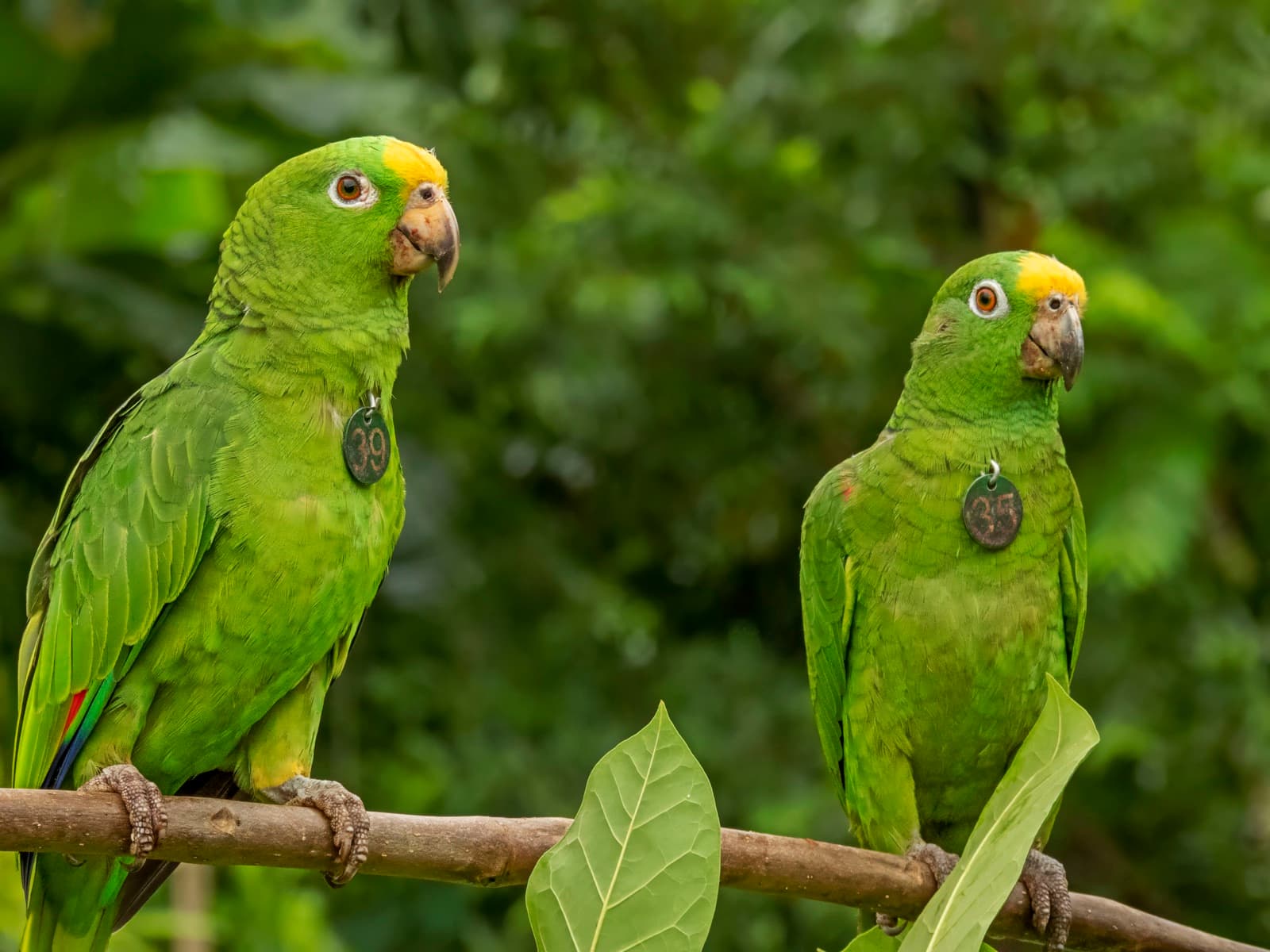
In our first release, 72% of 18 Yellow-crowned Amazons confiscated from the illegal trade were still alive and free one year later, with 100% flock cohesion — figures rarely seen for a reintroduction with no pre-existing wild population. Open access and replicable.
 Published in · Peer-reviewedBird Conservation InternationalCambridge University Press · 2026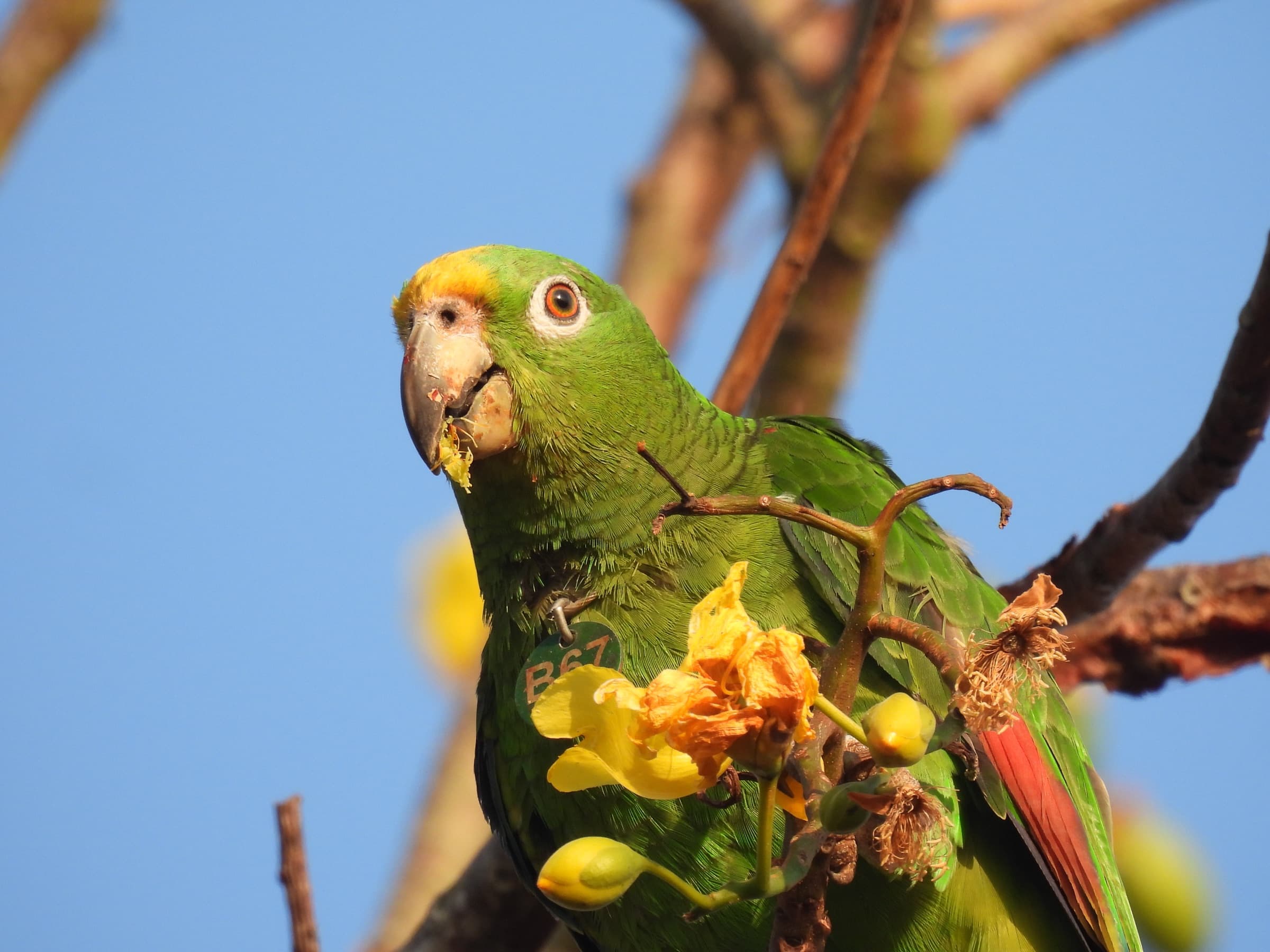
Can a parrot raised as a petsurvive in the wild?
The honest answer: almost never, if you just open the cage. A parrot raised at home doesn't recognise forest food, never learned to escape a hawk, and seeks people out.
But the outcome isn't luck. A handful of measurable factors —how it was raised, whether it trained to fly, how many birds it's released with— change everything. Answer a few questions and we'll give you an estimate, and more importantly, what it would take to improve it.
Many more ways
Sponsoring companies, public donor registry, one-time donation, direct bank transfer — and more.
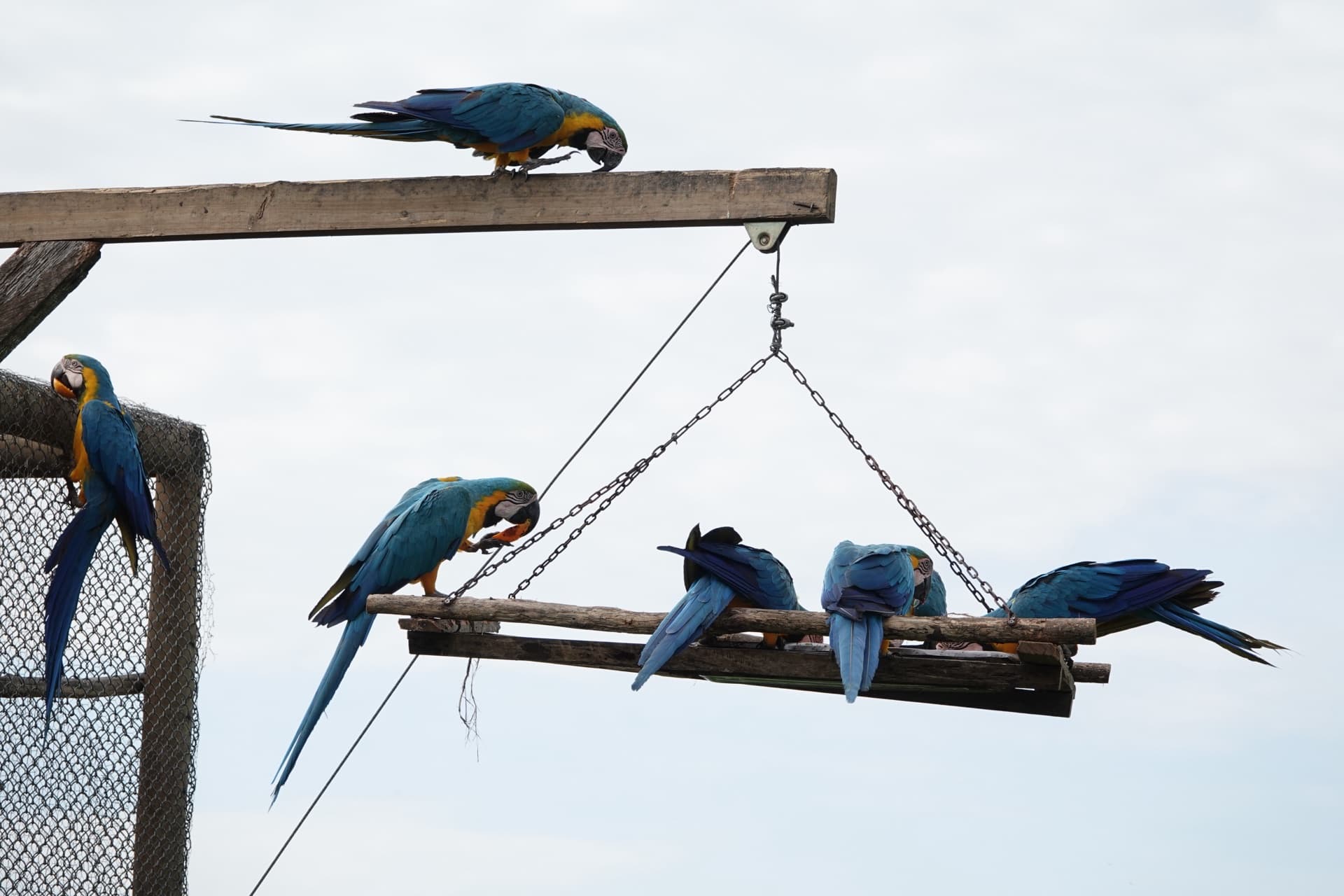
Ourapproach
How we think about rehabilitating and releasing parrots and macaws — an open framework that anyone can read, discuss and replicate.
We don't domesticate. We don't induce fear. We develop capabilities.
Every animal that has been a victim of captivity deserves a second chance — with real possibilities of success. Our work is to walk alongside them through that process of freedom and reintegration into their natural world.
Alejandro Rigatuso · Founder and Director of Fundación Loros
Whowe are
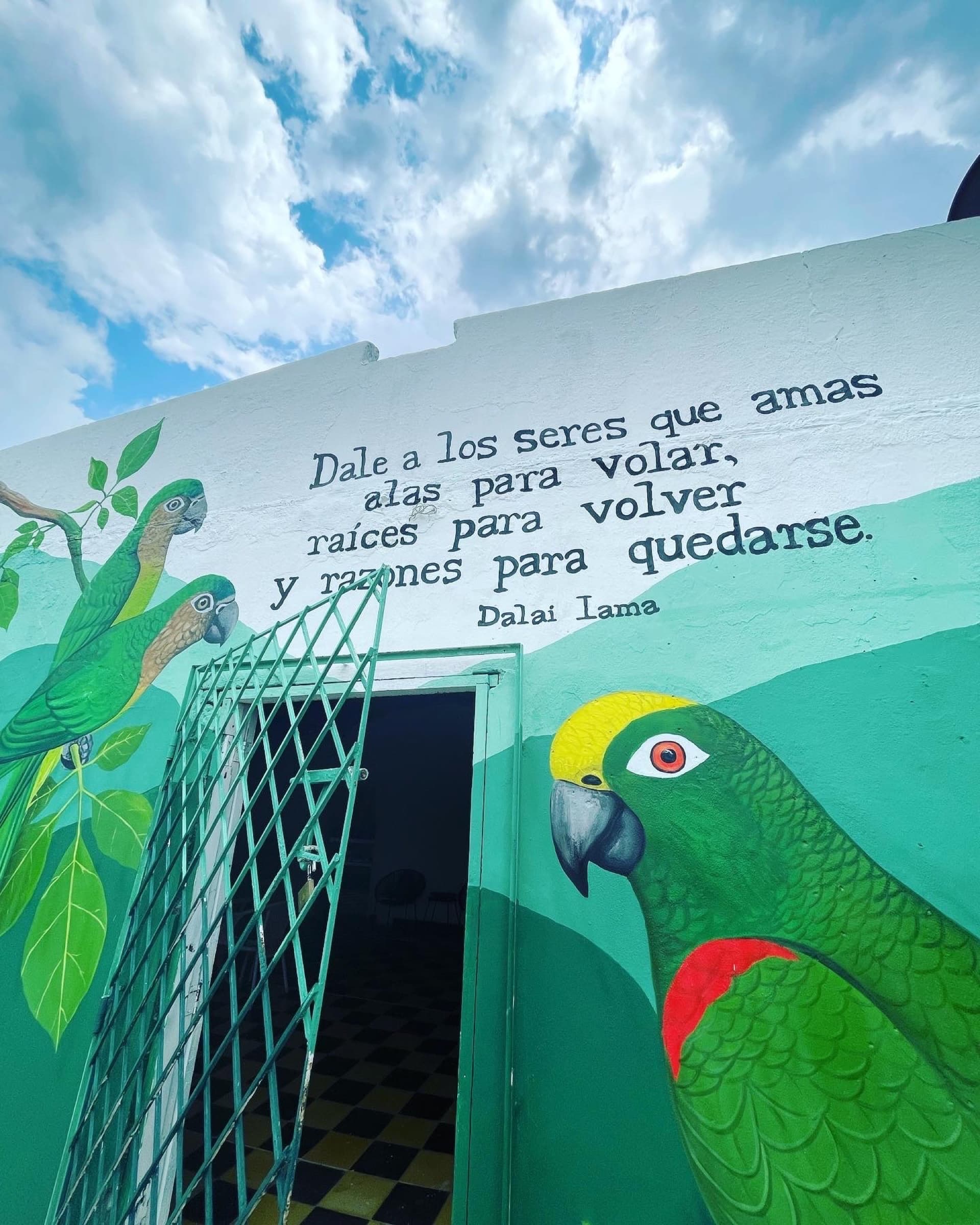
We are not a zoo or a final destination: we are the bridge between captivity and freedom. An interdisciplinary team — biologists, veterinarians, forest rangers, and neighbors from Villanueva — supports every return to the tropical dry forest of Bolívar, alongside the community and environmental authorities. We work toward an uncomfortable goal: that one day the Foundation is no longer needed.
What wedo
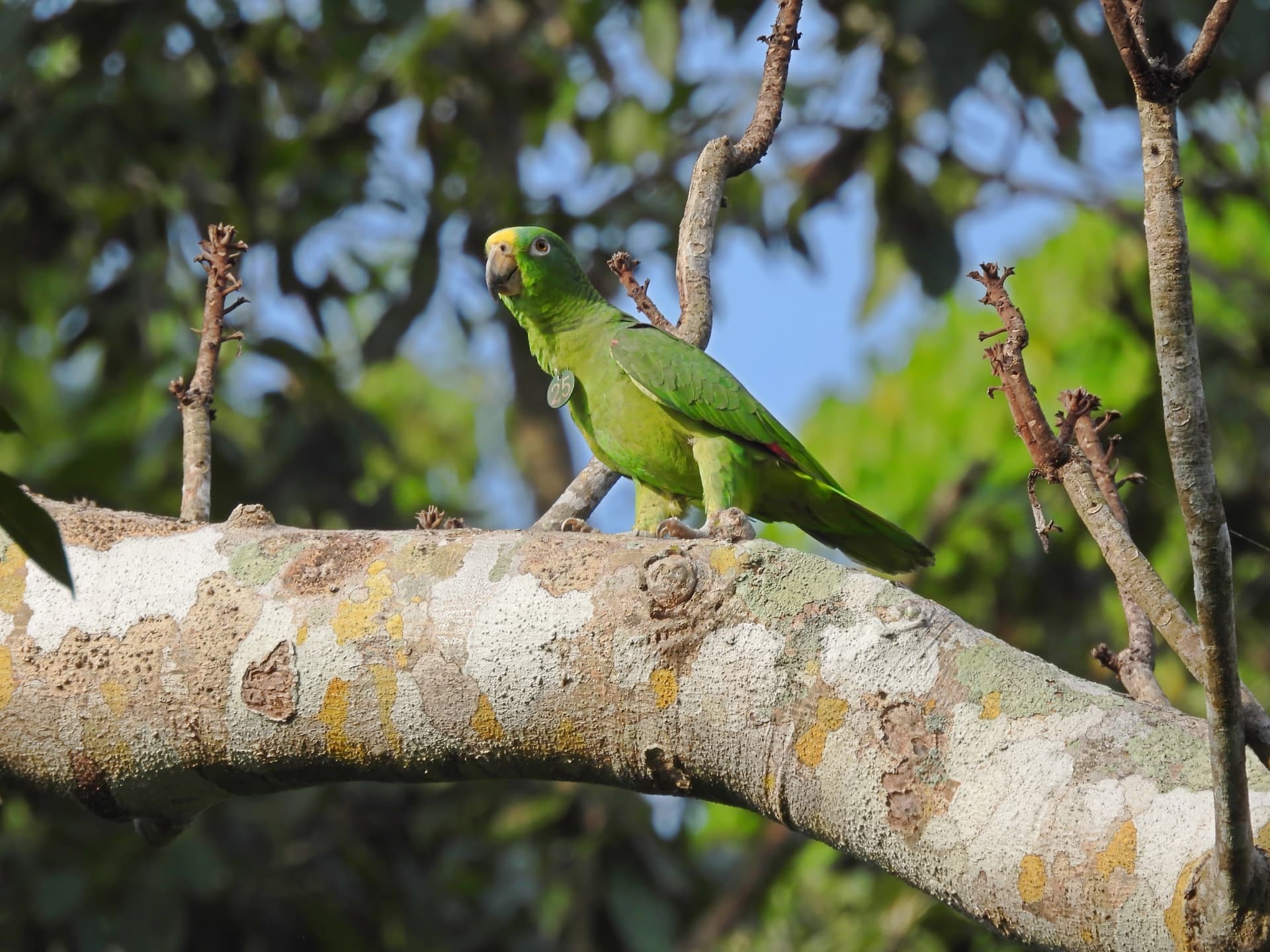
A second chance isn't a speech — it's fieldwork on five fronts. We rehabilitate and reintegrate psittacines arriving from seizures and surrenders; we restore the tropical dry forest; we research and monitor every release; we educate schools, volunteers, and companies; and we align the territory with authorities and farmer guardians. Everything points to one thing: returning birds to the sky.
Environmental oversight and compliance
Fundación Loros conducts its operations under the supervision of the Regional Autonomous Corporation of the Canal del Dique (CARDIQUE), the competent environmental authority for northern and central Bolívar.
Registered in the Wildlife Friends Network · Resolution No. 1972 of December 28, 2022 and its subsequent acts.
The logo identifies the environmental authority that exercises oversight; its use does not imply sponsorship or partnership.
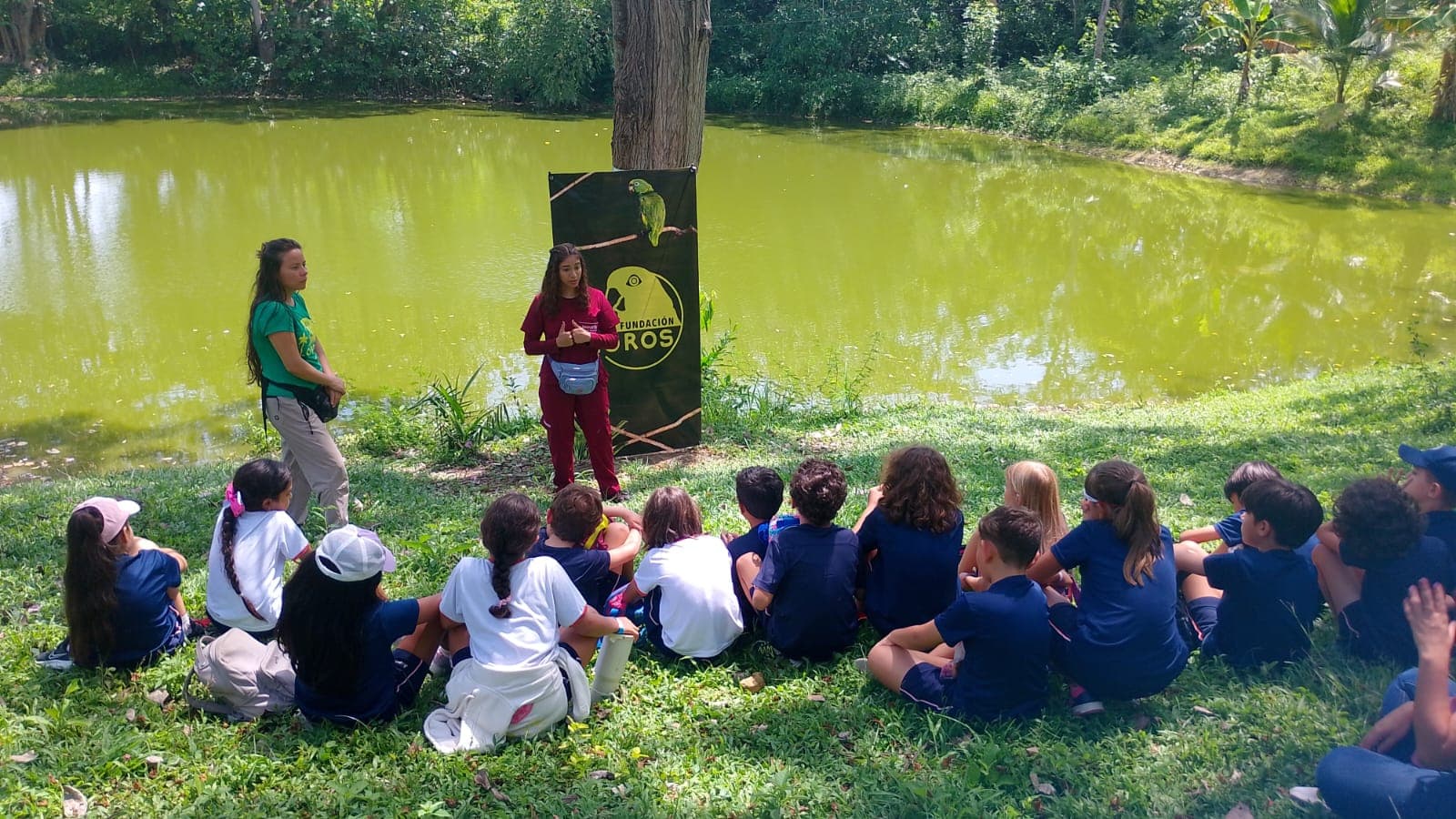
Educationalprograms
Regenerative, immersive experiences for schools, universities, community groups and companies. Participants plant, harvest, feed, and monitor — they leave the land better than they found it.
Not an exhibit. Participation.
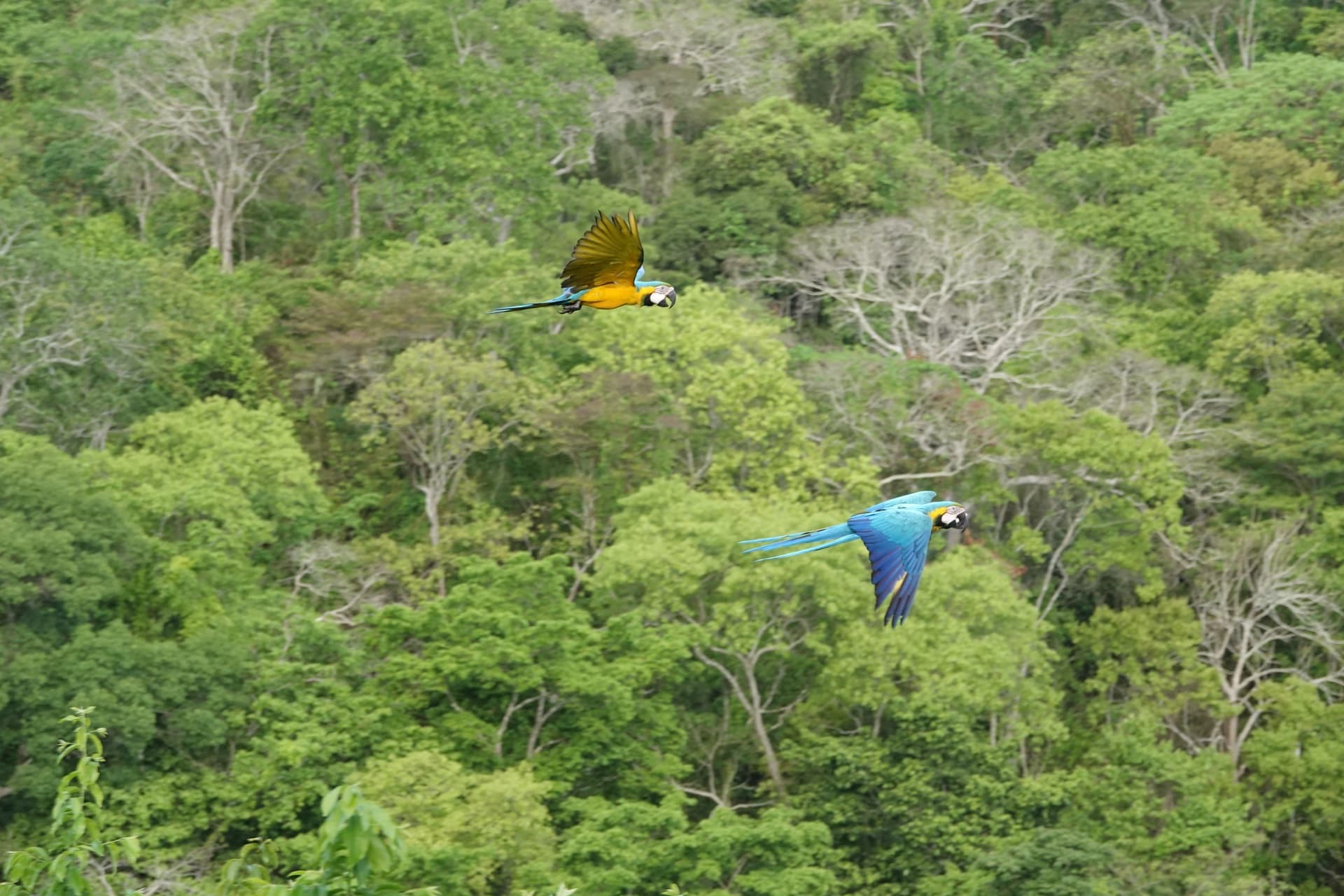
Researchand monitoring
Releasing a parrot doesn't end the work: it opens the scientific question. What does it eat in the wild? Which trees does it return to? How does the flock survive? We document those answers in video and open data — with visitors who birdwatch and volunteers reporting from the field.
First public installment of this series: wild foods in the tropical dry forest of Villanueva.
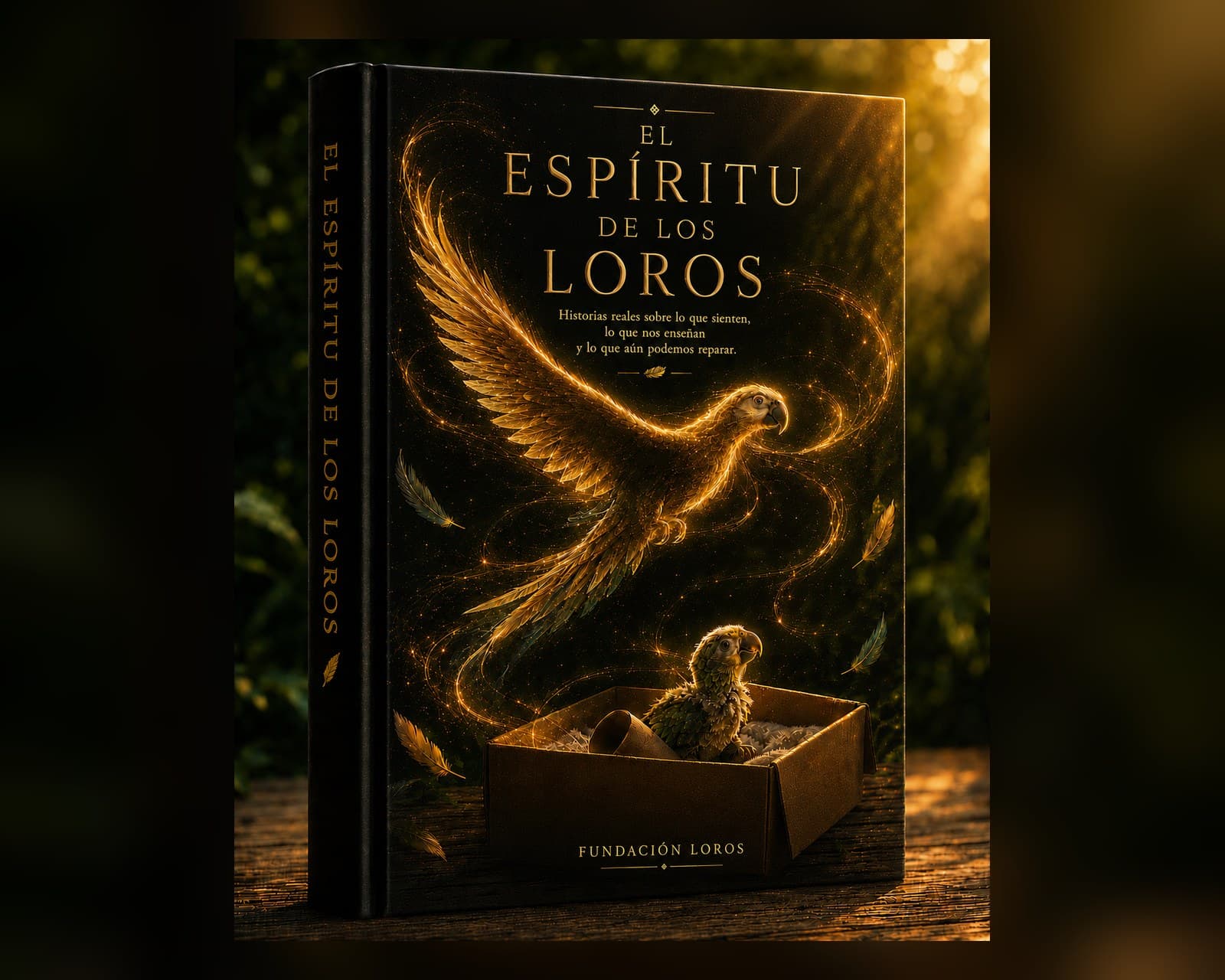
The Spirit of the Parrots
“For one second that person’s body knows what it is to have been born to cross an entire valley before breakfast and to have spent five years on a perch sixteen inches wide.”
The Spirit of the Parrots is a collection of stories, based on real events involving parrots and people in Colombia, that invite us to feel… and to repair.
Frequently asked questions
What is Fundación Loros?+
We are a nonprofit from the Colombian Caribbean dedicated to rescuing, rehabilitating and returning parrots and macaws — victims of captivity and wildlife trafficking — to the forest. We work in a tropical dry forest reserve, where we also protect the habitat these birds need to be free again. Learn who we are →
Where is Fundación Loros located?+
The reserve is in Villanueva, Bolívar, in the Colombian Caribbean near Cartagena de Indias. You can visit by prior arrangement. See how to get here →
Can a parrot that was a pet be rehabilitated?+
Some can, through a gradual rehabilitation process — health, flight, wild foraging and socialization with their own species. But it is not automatic: the chance of returning to the wild depends on several factors tied to the individual, the rehabilitation process and the release site. Many parrots that lived as pets make it back to the forest; those that do not meet the release criteria remain under permanent care at the sanctuary. Our method is documented and is now peer-reviewed science. Learn about the method →
And in your specific case? Our quiz weighs more than 10 variables that help estimate a rehabilitated parrot's odds of a successful release. Take the quiz →
Can I visit the reserve?+
Yes, with advance booking. We offer guided conservation experiences — hiking, birdwatching and more — as well as community open days at the reserve. Plan your visit →
How can I help?+
There are several ways: bringing food to the reserve, gifting a nest or a feeder, sponsoring a species with a monthly contribution, or joining as a volunteer. See all the ways to help →
I have a parrot I can no longer care for. What should I do?+
In Colombia, wildlife surrenders go through the environmental authority of your region (in Bolívar it is CARDIQUE; in Cartagena, the EPA). We put together a step-by-step guide on how to do it and who to contact. Read the surrender guide →
A tropical dry forest reserve
Fundación Loros protects hundreds of species of the tropical dry forest — beyond the parrots and macaws we release.
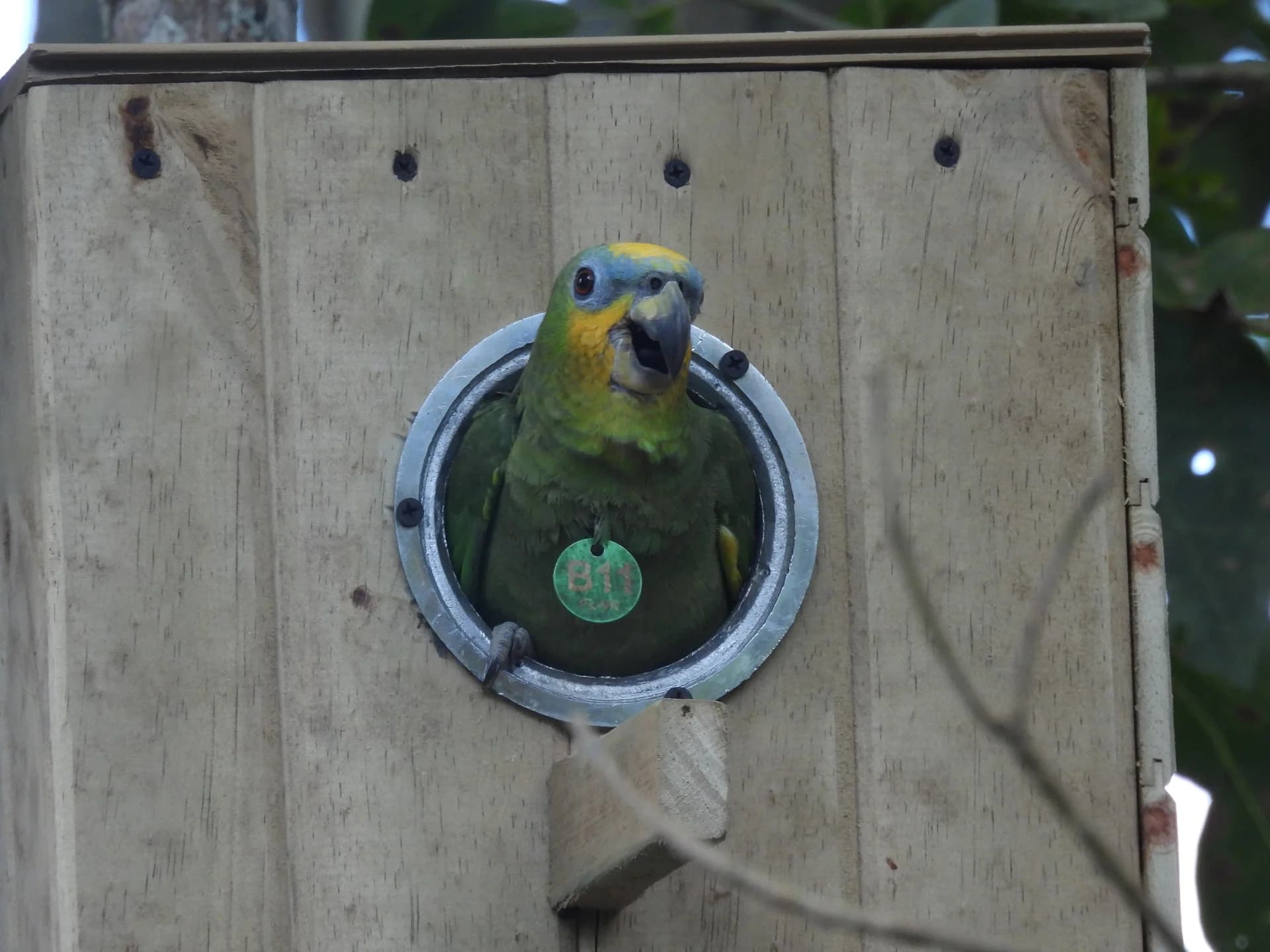
Goal 2026100 nests in the tropical dry forest.
Rehabilitated birds return to the forest, but without natural cavities in old trees they can't reproduce. Each artificial nest anchors a pair to the territory and opens the door to a second generation.
Each $290.000 COP (~$78 USD) covers one complete box: wood cut to the right biological dimensions, installation at a safe height, periodic monitoring, and replacement when it deteriorates. Measurable work, not symbolic charity.
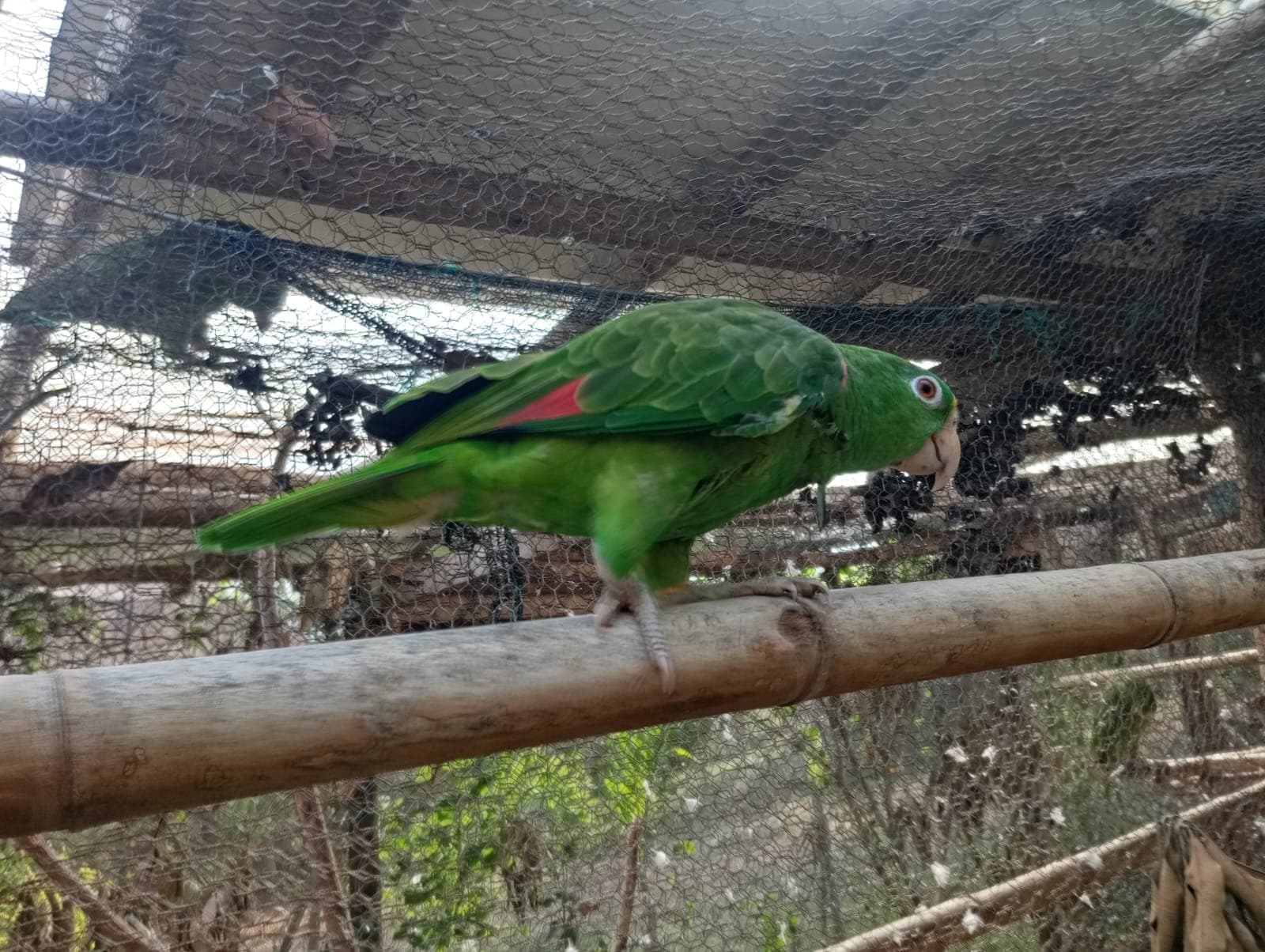
Walk the trail with us
There are many ways to get involved: spend a day as a volunteer, sponsor a parrot in rehabilitation, plant a native tree, or simply share what we do.
Dos caminos, un mismo bosque
Desde donde estés o viniendo a la reserva: las dos formas sostienen el mismo trabajo. Elige la tuya y hazla realidad hoy.
They support the sanctuary in a big way.

Allies