Open protocols
How we work: applied science for returning birds to the forest, explained for everyone.
Transparency
Trust isn't asked for — it's earned by showing how things are done.
Here we explain how we rehabilitate birds: the methods we use, the concepts behind them, the experiments and the results. Grounded in peer-reviewed scientific literature, but written so anyone can understand it. This is not marketing: it is the method, open for discussion.
Five stages of the process
From the group to the forest
Moving from one stage to the next does not happen by calendar: a bird advances when it demonstrates the competencies of the previous stage. The human reduces presence at every step.
- 01
Inside the aviary
Social-group formation and physical baseline. Neutral handling, no affection. The bird advances when: stable group, functional flight between stations, healthy plumage.
- 02
The threshold
Controlled access to the outside. The bird leaves and returns to the aviary — it learns the release site is the safe harbor. Locating the feeder and coming back are the two key behaviors.
- 03
First days outside
Begins to build a mental map of the territory. The goal: navigate without getting lost and return to the feeding and hydration station to refuel, while strengthening physical skill on every flight.
- 04
More height, more distance, more foraging
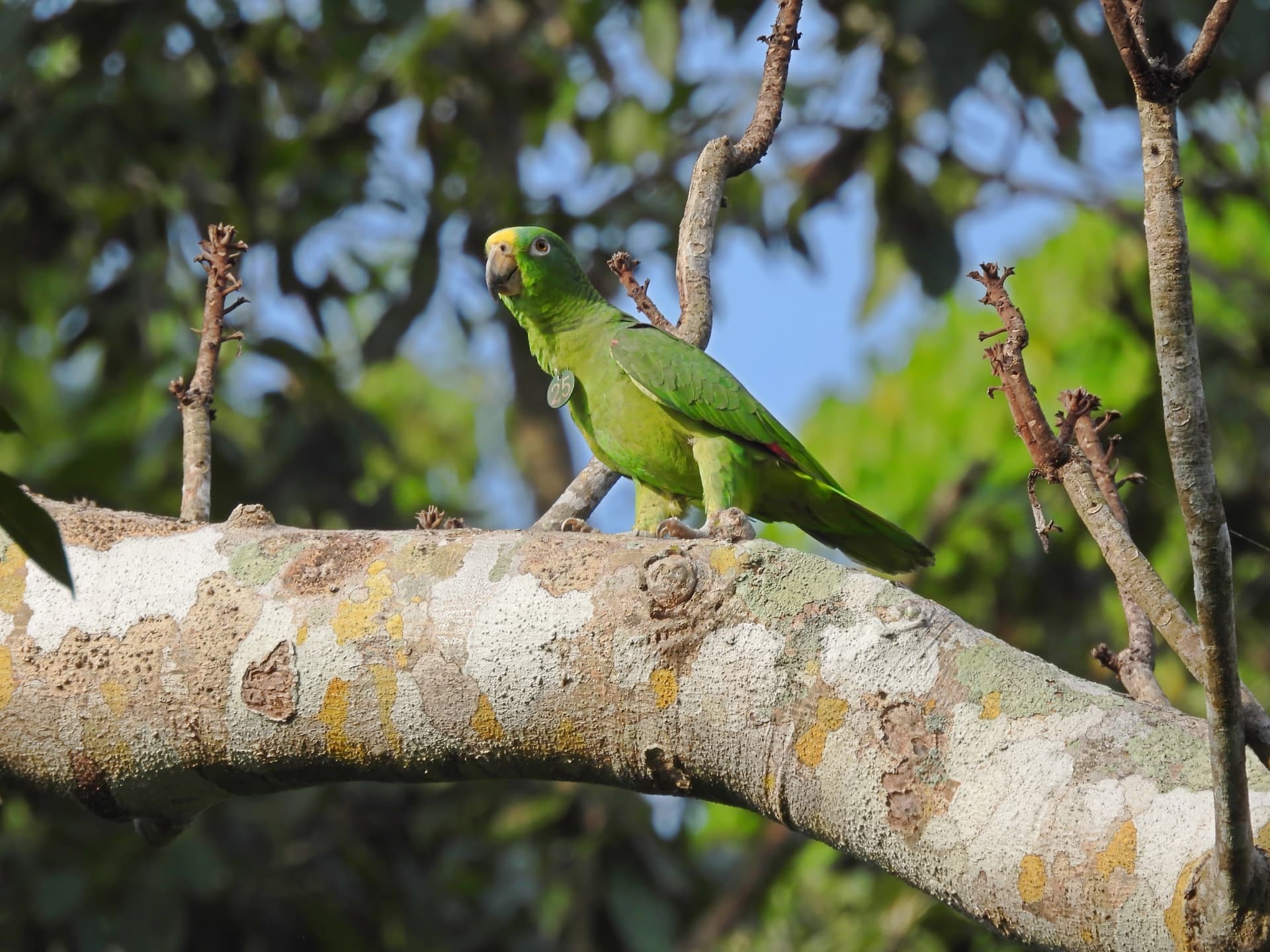
The bird seeks wild food — yellow silk-cotton, red mombin, papaya. We document on video what they choose to eat. The feeder remains available but stops being the main source.
- 05
Independence
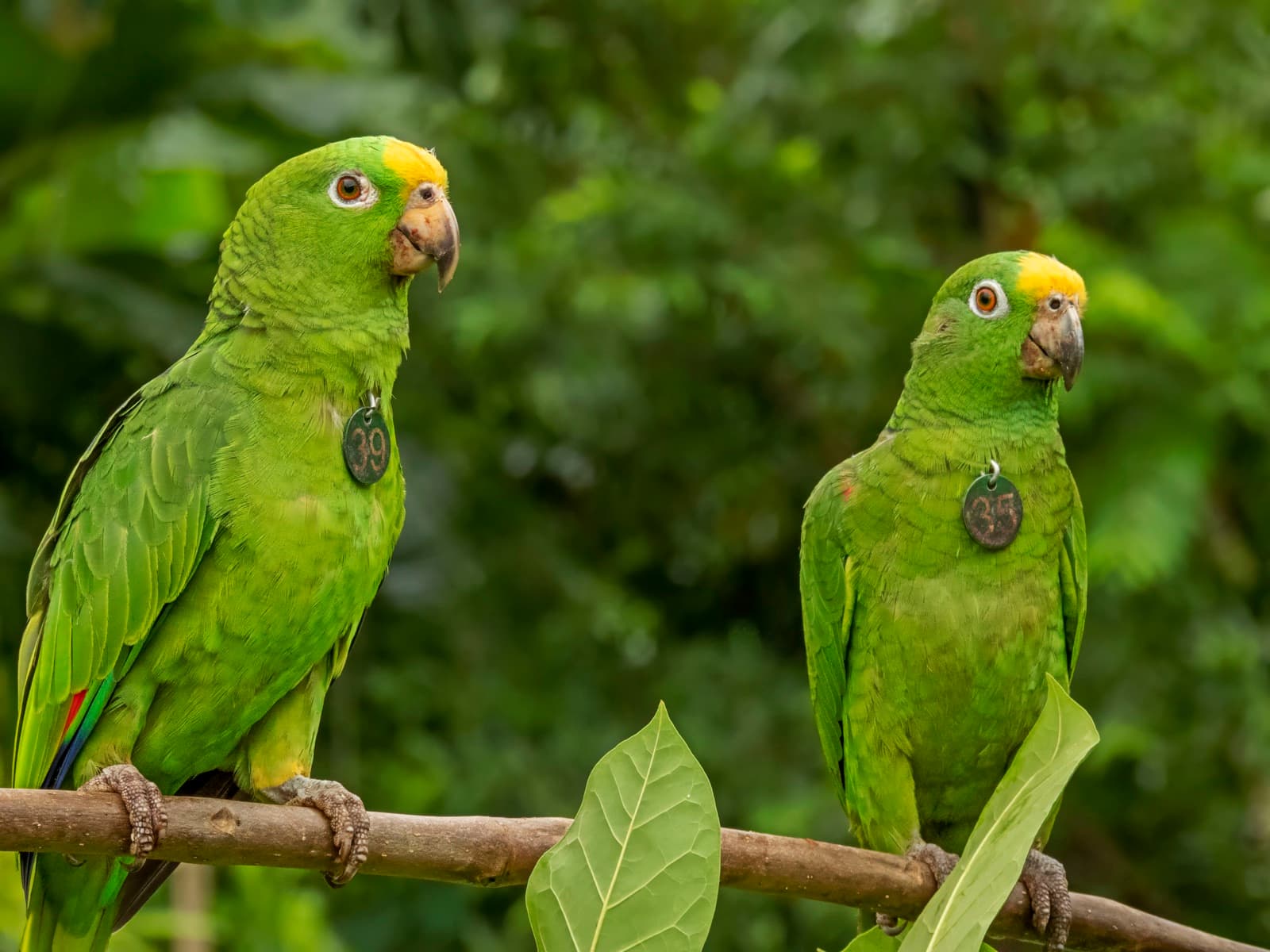
Sporadic returns to the release site. The flock moves through the territory. Monitoring by visible band, camera traps and community reports.
The aviary trains the body; the forest teaches the rest.
Our method, complete and open
What you saw above is the cover. The full document covers the evidence base, key devices, monitoring metrics, handling ethics and bibliography. It is open to review and critique.
Articles
Brightsmith, Rigatuso, Biro y Geiszler (2026) · Reproducción en español del artículo publicado en Bird Conservation International (Cambridge University Press)
Liberación exitosa de loros Amazona decomisados mediante entrenamiento de vuelo libre
Read moreAlejandro Rigatuso · Founder and director, Fundación Loros
Human-Guided Behavioral Development: the principle behind free-flight in conservation
Read more
Alejandro Rigatuso · Founder and director, Fundación Loros
Free-flight training vs. strict human isolation in parrot rehabilitation
Read more
Environmental oversight and compliance
Fundación Loros conducts its operations under the supervision of the Regional Autonomous Corporation of the Canal del Dique (CARDIQUE), the competent environmental authority for northern and central Bolívar.
Registered in the Wildlife Friends Network · Resolution No. 1972 of December 28, 2022 and its subsequent acts.
The logo identifies the environmental authority that exercises oversight; its use does not imply sponsorship or partnership.
How we rehabilitate, in practice
Meet the full rehabilitation and reintegration process for psittacines.