Lilo's second chance
By Laura Sánchez · Colombia, Santa Marta · Orange-chinned parakeet (Brotogeris jugularis)
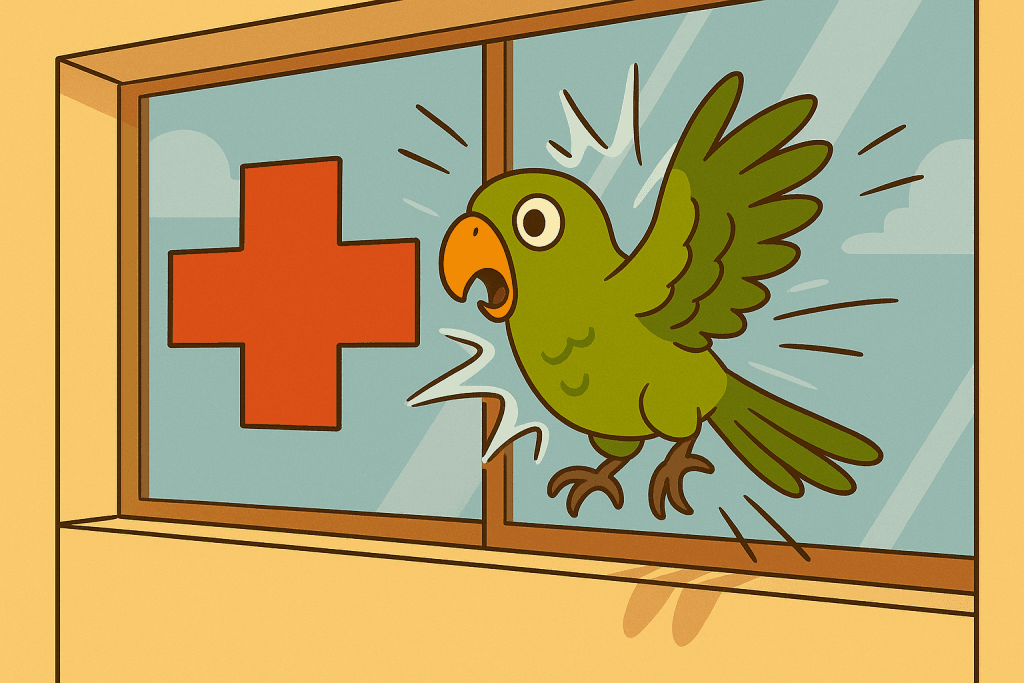
That day, I was leaving the emergency room after waiting several hours to be seen. At the hospital entrance, I saw a man sitting on the curb, holding a parakeet against his chest. The bird had, minutes earlier, flown into the emergency room window. It was weak, breathing with difficulty, and its beak was bleeding. The man didn't know what to do, so I walked over and told him I would take responsibility for the little one. I carefully picked up the parakeet and ran out to the street, looking for a vet that treated wildlife. I called several — none could help. In tears, I called my mom and asked her to take it home so it wouldn't die alone. Minutes later, she managed to reach a clinic that agreed to treat wild birds.
We arrived at the vet around 7 p.m. The doctor received us, examined the parakeet, and said it needed an X-ray to rule out internal damage — blood was matting its chest and the bird was breathing with great difficulty. Something so small and fragile needed my full attention. I would pay whatever it took. They ran the tests, gave it an injection, and told me that night would be decisive. So it wouldn't get cold, I prepared a small box with a perch inside, and I checked its pulse every hour. The next day, Lilo — as I decided to call it — was alive. I moved it to a small cage to keep caring for it.
Years earlier, I had bought two parakeets in downtown Barranquilla to give them a better life — their owners weren't looking after them. We lived in a rural area, and one day, through carelessness, both escaped and I never got them back. I like to think they found a good habitat. So when I saw Lilo in its cage, dozing and eating, I noticed something in its eyes: the need to fly. I took it outside in its cage for some sun and watched it try to squeeze through the bars, convinced the moment had come to return to freedom. I was afraid it might strangle itself trying, but it kept at it. That was its signal to go back to the forest.
I reached out to a friend who works in animal welfare, and she gave me the number for the Centro de Fauna de Corpomag. I expected days to pass before anyone responded, but they called back within minutes. Thirty minutes later, they arrived to collect Lilo. Those five days of care had been intense: I fed it, cleaned its cage, and above all, I looked into its eyes and tried to understand its suffering. As much as I wanted to keep it, its place was not in a small cage but among the branches. Letting it go was hard, but I knew it was right. Lilo deserved to fly free.
As I watched them leave with its cage, I remembered that a year earlier I had suffered a cerebral thrombosis. The recovery was nothing short of extraordinary: I came through that episode without lasting effects. Watching Lilo fight to survive made me think of the second chance I had been given, and I understood that my responsibility was to help it stay alive — and then return it to its habitat.
Now I know Lilo is flying, and it comforts me to think I gave it a second chance. Its small eyes behind the bars taught me that a parrot should not live caged, but in a tree, feeling the wind. I cried when I handed it over, but I'm left with the satisfaction of having done the right thing. I keep the photos from its recovery — and above all, the memory of that determined look. It didn't want to be caged. It wanted to fly.
Analysis and reflections from Fundación Loros
Lilo and Laura's story illustrates the transformative power of empathy and compassion in the human-animal relationship. When Laura finds Lilo — a parakeet injured and exhausted after flying into the window of an emergency room — she decides to take responsibility for his care despite real obstacles: vets who refuse to treat wildlife, nights of uncertainty, and the fear of leaving him alone. That commitment reveals something essential about Laura: she doesn't see the little bird as a trophy or a pet, but as a vulnerable creature who deserves a second chance.
By giving Lilo shelter, food, and care, Laura rebuilds his life — and learns from him in the process. She recalls her own moments of fragility (her cerebral thrombosis) and recognizes that both their stories share the same core: support and recovery. But Lilo makes his own will clear when, after months of healing, he insists on spreading his wings and flying again. That unmistakable signal leads Laura to seek official channels — a foundation, the Corpomag technicians — to hand him over to trained professionals. It's a first step in an assisted release process, driven not by the impulse to simply let him go, but by a plan to ensure his return to the wild is safe and successful.
In the end, Lilo's joy in flying free doesn't just confirm that Laura made the right call — it awakens in her an ethical conviction: wild animals don't belong in our cages; they deserve to return to their habitat. The story teaches us that real love means respecting the nature of another, and that offering a second chance means walking the full path of recovery and reintegration with responsibility.